California leads the nation in digital government services, from renewing a driver’s license online to filing taxes or accessing health records. Behind the scenes, systems like Calforauth work quietly to keep everything secure. If you’ve ever wondered how the state verifies your identity without making the process painful, this guide breaks it down.
As someone who has followed California’s tech infrastructure for years, I’ve seen how identity verification has become critical. Calforauth represents an important piece of that puzzle. It helps organize and strengthen access control across state digital platforms. Let’s explore what it really means, how it works, and why it matters for everyday Californians.
What Is the Calforauth System?
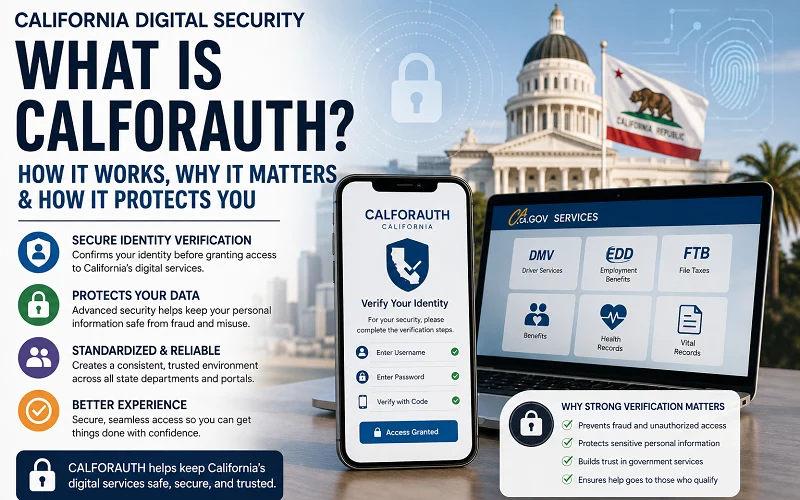
Calforauth is a standardized identity verification framework used in California’s digital services. Its main job is simple but vital: confirm that the person trying to access government systems is who they claim to be.
It doesn’t replace every tool but brings consistency to how the state checks identity. Whether you’re applying for benefits, accessing public records, or using secure portals, Calforauth helps ensure only authorized users get through.
Think of it like a smart digital bouncer. It analyzes requests in real time, looking for anything suspicious while keeping the experience smooth for legitimate users. In today’s world of rising cyber threats, systems like this protect both personal data and public trust.
Why California Needs Strong Identity Verification
California serves nearly 40 million residents with countless online services. That scale creates big challenges. Without solid verification, fraudsters could steal benefits, access private records, or disrupt government operations.
Calforauth addresses this by creating a standardized environment. Every department follows similar secure rules. This reduces confusion and strengthens overall protection.
Key benefits include:
- Preventing Unauthorized Access: The system blocks suspicious attempts immediately.
- Protecting Sensitive Data: Personal information stays safer from misuse.
- Building User Trust: When people know their data is handled securely, they use services more confidently.
- Supporting Law Enforcement: Secure systems make it harder for criminals to exploit government platforms.
One clear example: During high-demand periods like tax season or disaster relief, strong verification stops bad actors while letting eligible residents get help quickly.
How the Identity Verification Process Works
The process feels straightforward from the user side, but there’s serious technology behind it.
When you log into a California government portal, Calforauth (or similar connected systems) first checks your credentials. This might involve:
- Basic Login Details — Username, password, or government-issued ID number.
- Multi-Factor Checks — A code sent to your phone, email, or authenticator app.
- Behavioral Analysis — The system looks at your device, location, and typical patterns.
- Document Verification — For higher-security tasks, you may upload or scan official IDs.
If everything matches, you gain access. If something looks off, the system flags it for extra review or blocks entry. This layered approach balances security with convenience.
Real-world impact: Residents report smoother experiences with fewer account takeovers compared to older, less coordinated systems. The standardization means fewer weak spots across different state agencies.
Core Features That Make Calforauth Effective
Several important features set this system apart:
- User Identity Verification at the point of access.
- Real-Time Unauthorized Access Prevention.
- Strong Data Protection protocols that encrypt and monitor information.
- Secure Request Processing for every interaction.
- Standardized Environment across California government services.
These elements work together to create a reliable digital infrastructure. For instance, if someone tries to access records from an unusual location or device, the system can require additional confirmation without locking out the real user entirely.
Challenges and the Road Ahead
No system is perfect. California faces ongoing hurdles like evolving cyber threats, the need to serve diverse populations (including those with limited tech access), and balancing security with ease of use.
Calforauth helps by providing a foundation that departments can build upon. Future improvements may include better integration with mobile IDs, advanced biometrics, and even smarter AI that learns normal user behavior more accurately.
The state continues investing in these technologies because the cost of weak security—stolen identities, lost public funds, and eroded trust—is far higher.
How This Affects Everyday Californians
For most people, strong systems like Calforauth mean:
- Safer access to unemployment benefits, healthcare portals, and tax services.
- Fewer successful fraud attempts targeting government programs.
- Greater confidence when sharing personal information online.
Parents applying for school records, seniors accessing benefits, or small business owners filing permits all benefit from this behind-the-scenes protection.
One resident shared how quick verification helped them renew important documents during a busy move—without the usual delays or security worries that older systems created.
Best Practices for Staying Secure with California Digital Services
While the state handles heavy lifting, you play an important role too:
- Use strong, unique passwords and enable multi-factor authentication everywhere possible.
- Keep your contact information updated in state profiles.
- Be cautious of phishing emails pretending to be from California government agencies.
- Only access services through official websites or apps.
- Monitor your accounts regularly for unusual activity.
Simple habits like these work hand-in-hand with systems like Calforauth to keep your information protected.
Looking Forward: The Future of Digital Security in California
California continues pushing boundaries in government technology. Calforauth and similar frameworks will likely evolve with new tools like passwordless login, decentralized identity options, and tighter integration across local, state, and federal systems.
The goal remains clear: create secure, user-friendly digital services that serve all residents effectively. As threats grow more sophisticated, consistent and strong identity verification becomes even more essential.
Conclusion
Calforauth plays a key role in California’s digital security landscape. By standardizing identity verification, it helps protect residents, reduce fraud, and make government services more reliable and trustworthy.
Whether you’re a regular user of state portals or simply care about data privacy, understanding these systems matters. Strong identity verification isn’t just technical—it directly affects how safely and easily we interact with government services every day.
Stay informed, follow good security habits, and take advantage of the secure tools California provides. If you manage digital services or work in government tech, exploring Calforauth standards can help strengthen your own approaches.
What are your experiences with California’s online services? Share in the comments below—I read every one and often pull real insights for future articles. For more on payment security, retail tech, or California digital topics, explore the other guides on this site.
Your feedback helps make these resources better for everyone. Thanks for reading, and stay secure out there.